Translate

Showing posts with label food business startup. Show all posts

Saturday, June 23, 2012

Starting a business with your family

Family Ties
Interview with Margaret Wong and her sister Suzy Wong
80 Riverside Café (expected open January 2013)
Interview with Jeff Yoskowitz and Kathryn Gordon

Kathryn:  Hi Suzy, Hi Margaret. This space is so open and airy, and with the plants and the overhead fans it reminds me of a stage-set for a Cuban café.  How did you find this space, and what are you planning to do here?


Suzy:  We’re sitting in the hotel lounge area and this is where we will set up our cafe. We are located at the corner of 80th St. and Riverside Drive in a Landmark building hotel. There are no cafes along Riverside Drive and there are 120 rooms in the hotel. Hotel guests have to walk 2 blocks to Broadway if they want coffee and breakfast in the morning. Based on a survey I conducted of guests staying at this hotel and based on the overwhelming positive response of guests wanting a cafe on premises, we’ve decided to open a breakfast café here. The owner is a very dear friend of mine. He wanted to have a restaurant/outdoor cafe here many years ago but it was very difficult in the past to get the Landmark Preservation Committee to approve an outdoor cafe. We are in a sense fulfilling the owner's dream - many years later.

Jeff:  Landmark status is difficult to work around.  How are you managing that?

Margaret:  We’ve used the hotel’s architect, because there are very few landmark specialist architects.  He has now obtained permission from the NYC Landmarks Preservation Committee for us to create a new door opening facing the park.  That will allow us access to neighborhood foot traffic, in addition to hotel guests.  We’re hoping to attract customers throughout the day, then transition to light lunches and finally to afternoon snacks and treats as mothers and nannies take kids to the park after school.
  
Kathryn:  So Margaret, we know you from when you were a Chef Instructor at the Institute of Culinary Education (ICE).  Obviously, you’ll be managing the kitchen.  Suzy, what’s going to be your position?

Suzy:  I'm the day-to-day manager. Once the cafe opens I will be front of the house and barista/counter person.  

Jeff:  Margaret, what’s it like to work so closely with your sister?

Margaret:  Well actually, there are 2 more siblings involved!  My other sister will be in charge of the Café’s aesthetics and when we open she will be doing the sandwiches and wraps for lunch.  

My brother Simon, who is a architect, will be in charge of the inside renovations (and the hotel architect is working in conjunction with him for the outside modifications under the landmark rules).  There is also a pre-existing bathroom that we will spruce up and are sharing with the hotel.

Kathryn:  Wow, that’s an amazing group of resources to be able to draw upon. So where will the kitchen that your brother is designing be located?

Margaret: Right now, it’s the suitcase storage area for the hotel.  It actually was a kitchen once so there are pre-existing gas hookups. There is good solid floor tile, and windows and I’m thinking we might open up the art deco archway and have an open kitchen view from the café.  I might be able to host some demos and classes here eventually.

Suzy:  Can you visualize a kitchen in there?

Jeff:  I can visualize a kitchen anywhere!  It’s really tiny though!


Margaret:  It’ll be even smaller since the lease requires us to carve out a suitcase storage closet.  But I will have a Hobart mixer, convection ovens and other equipment.

Jeff:  What kind of terms did you get on that lease?

Suzy:  It’s a 5-year lease with a 5-year renewal option. We don’t begin paying until we are actually in business.

Jeff: Those are fantastic terms to have negotiated.  

Kathryn: And there really is nothing like this around you in this whole very residential neighborhood.

Suzy: We are fortunate as we already have a captive audience - the hotel guests!

Margaret: And especially in the summer, the amount of foot traffic passing outside is amazing! The baking aromas should help draw them all in, and there’s visibility to the kitchen thru these tall windows.

Kathryn: Margaret, for the 9 years I’ve known you, you’ve been a pastry and baking instructor. You’re making quite a transition from teaching.  How do you feel about that?

Margaret:  I’ve always wanted to have something of my own, and I’m the only member of my family in the food business.  I told my students what I was planning to do, and they were very supportive. I needed something more.  This is the time to do this, for myself and I couldn’t teach and focus on the business at the same time.

Kathryn: It helps immensely to have support from your family, as well.

Suzy: We’ve pooled our resources to finance everything and we are reluctant to take a bank loan. Having Simon overseeing the architect/design portion of the business has been a tremendous help in keeping our costs down. 

Jeff: Sometimes that’s risky, because you’re risking your own family relationships.

Margaret:  I think at the end of the day if this fails, we’ll still be ok as brothers and sisters.

Suzy:  As a family we are very close and each of us will work very hard to make this dream come true. We’re in a bit of shock today, because we just got our first bill from the hotel landmark architect. We should probably double the estimate for each project moving forward. 

Jeff: Did you have a concern that you were leaving a salaried position for a business that was going to take a long time to get off the ground?

Margaret:  Thankfully I have somewhat of a cushion and obviously, having an architect in the family will ultimately save on costs.   


Architect Simon Wong’s plan for the cafe

Jeff: Do you have a business plan?

Suzy:  Yes, we do and I find SCORE's website to be very helpful. You have to do a lot of your own work, but they give you guidance. We welcome any guidance/suggestions as this is so new to us.

Margaret:  We’re sort of all over the place, because we’ve never done this before.

Kathryn: In your business plan, how many customers are you expecting once you’re open?

Suzie: I tried to be very conservative.  We need on average of 75 customers a day, estimated from the hotel.  There are 120 rooms, and we believe based on my surveys that roughly 80% of those will get something for breakfast.  Throughout the rest of the day, if another 45 people total come in thru foot traffic from the neighborhood that would not be unreasonable.  We’re located right on the park!  On average we need each customer to spend about $4 to break even.

Jeff: That’s pretty reasonable for a break-even projection, given the cost of coffee and a croissant or danish!


Kathryn: Have you figured out your menu?

Suzy:   We’re going to focus mainly on breakfast items, sandwiches and coffee for now. If we could expand we would ultimately want to do wine and dessert. 

Jeff:  Since this is a hotel, are you planning to be open 7 days a week?  What are your business hours going to be?

Margaret:  7:30 am till about 6 pm. I think we can handle that every day, between all of us.

Jeff:  Besides the process of working in a landmark building, were there any surprises for you that you had no idea you were getting into?

Margaret:  No, not yet. We thought we would have to go all electric, but then we’ve been told that we have the ability to go gas, because there once was a kitchen here.  

Jeff:  There’s an existing bathroom – have you determined how you would share the responsibilities with the hotel of updating it, cleaning it?

Suzy:  You’ve just brought up an important point!  Like what happens with the shared space – that we have not thought about.  I think that we’ll be able to work out some plan with the hotel staff. 

Kathryn: Is it a concern that people might just hang out in the space here off the hotel lobby, and you won’t be able to turn tables?

Suzy: The hotel guests usually come in and check emails and go off to do other things in the city. I am noticing more and more hotels in Manhattan share their lobby areas with something like a Starbucks.

Kathryn:  Can we come back and see how the space comes out after the build out, before you open?

Margaret:  Sure!  I’d love to share my menu with you when it’s ready, too!


Want to Learn More About Our Services? Our Primary Website is

Saturday, June 9, 2012

Do I really need an accountant?

Everyone Needs Someone to Call

Interview with Enid Hoffman, CPA
By Kathryn Gordon and Jessie Riley

Kathryn:   Enid, we’ve been discussing various tax aspects of new businesses while we’ve been driving around in the van in rural France!  (Check out Kathryn’s trip under www.moulinbregeoncuisinecourses.com or trips through www.iceculinary.com)

I know you are a partner in a company with 250 accountants or so, so you’ve seen lots of food businesses over the years.  Let’s try to formalize some of the great recommendations you have for food start ups.

What’s the biggest accounting issue you’ve seen for start-up bakeries, cake/chocolate specialists, etc?

Enid:  The most constant question I’ve seen over my 34 years in the accounting business is:  you need help, but are you going to pay this person as an employee or an independent contractor?  There are legal and illegal ways to pay workers.  The legal way adds an average of 15% to your cost structure, and that is a huge expense for a new company.  By law, if you hire an employee you have to pay workers’ compensation, disability, and you have to match the employee’s Social Security contribution.  If you pay the worker as an independent contractor you do not have to pay this extra 15%, but this method of payment is illegal if the person is working as an employee in your place of business.

Kathryn:   Is the cost of processing an employee’s payroll also an issue? Like costs an employer would have to pay to someone through ADP?

Enid:  No, that’s small potatoes, maybe $20 a month per employee.  And I would definitely recommend someone with more than one employee to use a service for the payroll, because a payroll service can and should impound the payroll taxes.  If you utilize this service, the tax and insurance liabilities are withdrawn from your bank account immediately.  That guarantees the start up business will actually have the money paid to the various government agencies when the debt is due.

The business may not use a payroll service but still must remit the money on a monthly or quarterly basis.  Too many businesses think they will have the funds available but then spend the money for other business needs.  A new business cannot survive if they are not able to pay their bills on time, and you don’t want to accrue penalties from the government. 


Jessie:   Speaking of survival, I think new businesses are also afraid of having to pay an accountant on a monthly basis and what those accounting services will cost them.

Enid:   Sole proprietorship income and expenses are incorporated in a personal tax return.  If you have a good computerized general ledger such as Quickbooks, and no payroll, the return should run $700-$800 if there is no employee payroll. 

Kathryn:   So you recommend people use Quickbooks? 

Enid:  Some sort of accounting program should be used daily or weekly to assess your cash flow.  You could post entries into Quicken, but it is less robust than Quickbooks.  Either will tie to your bank account, but Quickbooks will allow more long term flexibility and growth with your company.  You still need an accountant to help you set up the books correctly, conduct a review of the books and records every 3 months for the first year, then semi annually thereafter.    

In any business you must reconcile the books and the bank statement which  Quickbooks does as a byproduct of the program.  If you do not reconcile, the books become unreliable because one does not know if all items have been posted and therefore you may or may not be reporting more profit or not showing the proper loss.


Kathryn:   I gather you recommend people absolutely hire an accountant.

Enid:   A lot of food-oriented businesses are cash businesses.  One of the biggest mistakes I’ve seen people repeat over the years is that if it’s a cash business – and you either pay too many people in cash, and/or take out too much cash yourself – you can’t justify to an auditor that you’re making enough money to justify the expenses you’re claiming such as food costs or your personal living expenses.  For example, you need to take money to live on, or your business will never be sustainable, and auditors know that.  You do not want to create a risk of a longer, more extensive audit because your expenses, sales and labor costs do not tie.

Let’s say you operate a 24-hour a day pizza business.  If you claim expenses for vast quantities of flour for your pizza dough, and you don’t show commensurate sales or payroll for the workers, then a government auditor would clearly know you are hiding sales and will conduct a tougher audit – and you could be facing criminal charges and would lose more than the cost of hiring an accountant to provide advice in the first place. 

Jessie:   I know several small food-related businesses that don’t seem to handle everything exactly correctly, like co-mingling personal and business funds or might have questionable practices paying their employees…

Enid:  If you are co-mingling funds into one checkbook, the IRS or the state could audit all of your personal and business transactions which can be a costly and tedious audit.   If the business has a separate account, the auditors will audit only the business account and will not review the personal expenses. 

It can also create a risk if an employee pays the staff without a W-2 (generating the 15% additional overhead for the workers’ compensation, disability and matched Social Security).  This can result in a penalty for the business.  Another problem is if you pay the worker as an independent contractor (also known as a 1099 worker) – unless the worker truly is an independent contractor.  And for independent contractor status, the worker has to:  a) work for more than one employer doing this type of work, and b) “hang a shingle out” advertising that you are in this type of business.  For example, if you’re in the yellow pages as a freelance chef, only then, whether you work 1 or 30 hours for a company, you would get a 1099.  Only if you are a corporation, you will not get a 1099.


Jessie:  So what should businesses be aware of that might be a red flag for getting audited?

Enid: “Invisible employees.” A red flag is raised as soon as a company has a pregnant “invisible employee” who files for disability because she can’t stand in your bakery 12 hours a day. Other examples are someone washing dishes, who is paid as a “invisible employee”, gets hurt on broken glass and goes to the hospital thinking he/she has worker’s compensation, or the work is cyclical and the “invisible employee” files for unemployment in a down period after making seasonal chocolates.

There’s no record of the “invisible employee,” because the business hired the worker as an independent contractor (1099) therefore the company didn’t pay the required workers’ compensation, disability or match the Social Security – and that’s a risk for opening an enormous can of worms.  Worker’s compensation alone can issue 5 years of financial penalties and close down a business!

Kathryn:   I know that at some times in the past that I’ve been an “invisible employee.”  I also know I’ve worked for someone who never issued me a 1099.  Where do these lines get legally drawn? 

Enid:   There’s something called “20 common law questions” regarding having to issue a 1099 for someone who is truly working for you.  The question has to do with who can generate the ultimate profit from a scenario.  Someone is considered truly freelance and will receive a 1099 if they are in business for themselves. Then this person is not an employee. 

For example, if I am hired to make a wedding cake and I hire you to do the work for $300, you can make the profit/loss depending on the ingredients and time it takes you.  This person is an independent contractor.  If I ask you to come to my bakery and bake a wedding cake and I give you $30 per hour and supply the ingredients, you are an employee, as the bakery is going to make the potential profit or loss. 


Kathryn:   What’s the threshold someone has to earn from one company to get a 1099?

Enid:   If a company pays someone more than $600 in a calendar year, they should issue a 1099.  Not all businesses do, but the burden is on the taxpayer as the taxpayer must report all income whether the taxpayer received a W-2 or 1099.  An employer can get a $50 penalty – but it is rarely issued, so it’s a risk some businesses are willing to take.  (By the way, if an independent contractor did not receive a 1099 and they feel that they should get one, they can report the business to the IRS via a complaint form you can download on the IRS website – and that’s a better way to get action than just making a phone call to the IRS).

Jessie:  How often should I be contacting my accountant to make sure my business is doing everything the correct way?

Enid:  As an accountant, I accept calls all the time.  Every business needs someone they can just call.  I truly enjoy helping new businesses establish themselves – what could be more rewarding?  Eventually though, someone has to realize that time equals money for professionals, and you might be sent a bill if you continuously ask questions during the year. 

Kathryn:   So you might get a bill if you’re calling your accountant 5 times a day, I guess?

Enid: People ask questions all the time.  It comes with the territory, and I like sharing my expertise.  I’ve always liked helping young businesses, and have found that ones owned by women especially need pushing.  I like doing it and it has become my niche, with over 70% of my client base being women business owners.

Kathryn:   Do you ever make field calls and visit your clients?

Enid:  It can actually be more cost effective to visit a business at least once so you have a better understanding of what the client is talking about, but on a routine basis for a single proprietor it probably makes more economic sense for them to come into the accountant’s office. 

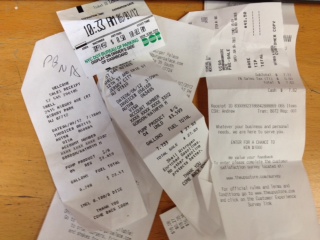
Hint from Chef Kathryn:  Always enter your receipts on a timely basis into your accounting software, and scan them.  After a period of time, most check register receipts fade.  I've seen one (failing) small business not file their taxes for a long time, because they knew they wouldn't owe anything because their expenses far outweighed their receipts.  Eventually garbage bags full of 5-year old, illegible receipts were brought to the accountant...  Not a great business procedure. 


Want to Learn More About Our Services? Our Primary Website is